
Girona Day Trip from Barcelona: Trains, Route & Tips
Updated
Girona is the easiest good day trip from Barcelona. The fast train takes about 40 minutes, the old town is small enough to cover on foot, and in one day you get a cathedral with a world record, one of Europe’s best-kept Jewish quarters and a walk along the medieval walls.
The short version:
- Train: the high-speed Avant or AVE from Sants takes around 40 minutes (book a seat). The cheaper R11 regional takes about 1h20, no booking needed.
- Time: leave Barcelona by 9:30 and you can see everything below and be back for dinner.
- Money: the whole route is free from the outside. Going inside the Cathedral, Arab Baths and Jewish History Museum costs about €16.50 in total.
- Avoid: Mondays if you want museums, and the Temps de Flors week in May unless you like crowds or are coming for the festival itself.
Getting there
The fast train. Renfe’s Avant and AVE leave from Barcelona Sants and take about 40 minutes. Avant costs roughly €7 to €19 each way, cheapest when booked early. Renfe’s low-cost Avlo also stops at Girona on some trains. All of them need a seat reservation, so book on renfe.com a day or two ahead.
The R11 regional. Slower, at around €12.50 to €13, with no booking. It also stops at Passeig de Gràcia and takes about 1h20 on the faster “MD” trains. Check the Rodalies timetable with your Barcelona station and Girona as the destination. The catch is reliability, so if your day is tight, take the fast train.
Heads-up: after the October 2026 storms, Rodalies trains, the R11 included, can be badly delayed or cancelled. Check the line’s status before you go.
From Girona station it’s a flat 10 to 15 minute walk to the river.
The walking route
This order climbs the hill once and brings you back down along the walls towards the station. The walking itself is only about an hour. Arrive around 10:30, have lunch after the Cathedral and El Call, and you’ll reach the walls around 16:30.
1. Plaça de la Independència
An arcaded square on the modern side of the river. Have a coffee here before the climb.
Free audio story in the Parlawalk app.
2. The Onyar houses
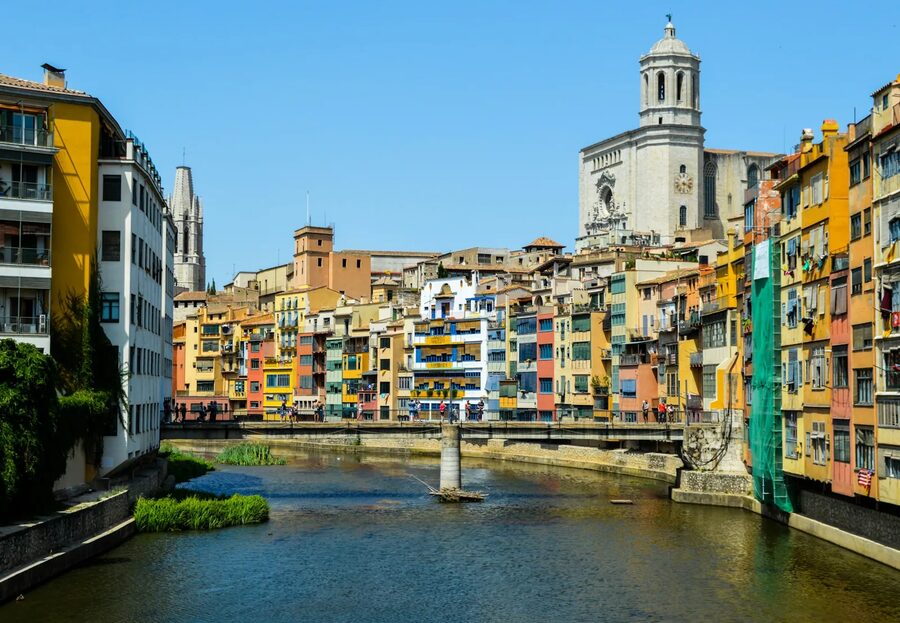
From the Pont de Pedra, look upstream at the painted houses hanging over the water. Many were built onto the old city wall, which is why they stand right on the river.
3. The Eiffel Bridge
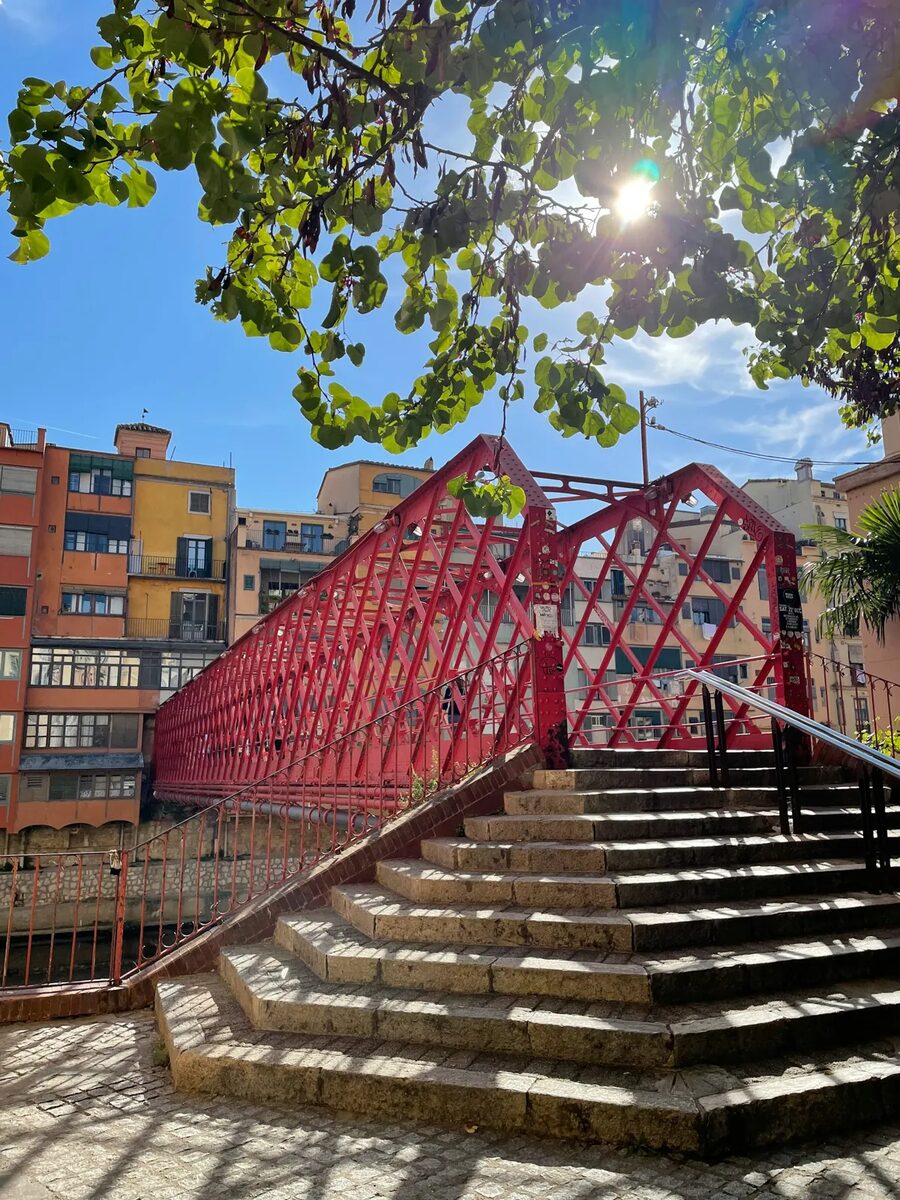
The red iron Pont de les Peixateries Velles, built in 1877 by Gustave Eiffel’s company, twelve years before the tower. Cross it into the old town.
Free audio story in the Parlawalk app.
4. Rambla de la Llibertat
The old town’s arcaded main promenade. Walk its length, then turn uphill towards the Cathedral.
5. Girona Cathedral
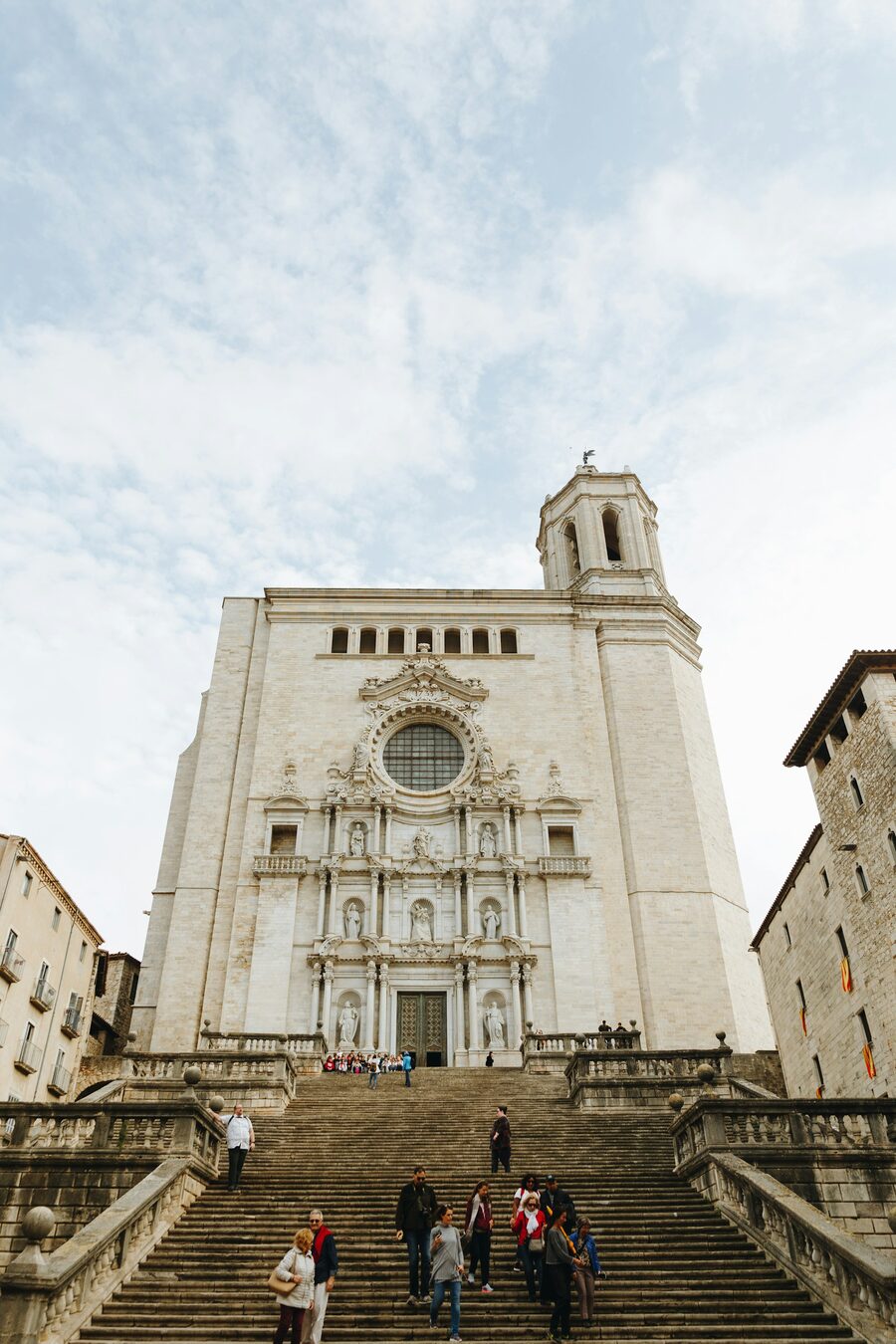
Head up Carrer de la Força and climb the 90 steps to the Cathedral. Inside is the widest Gothic nave in the world, almost 23 metres across, with no columns breaking it up.
Free audio story in the Parlawalk app.
6. El Call, the Jewish Quarter
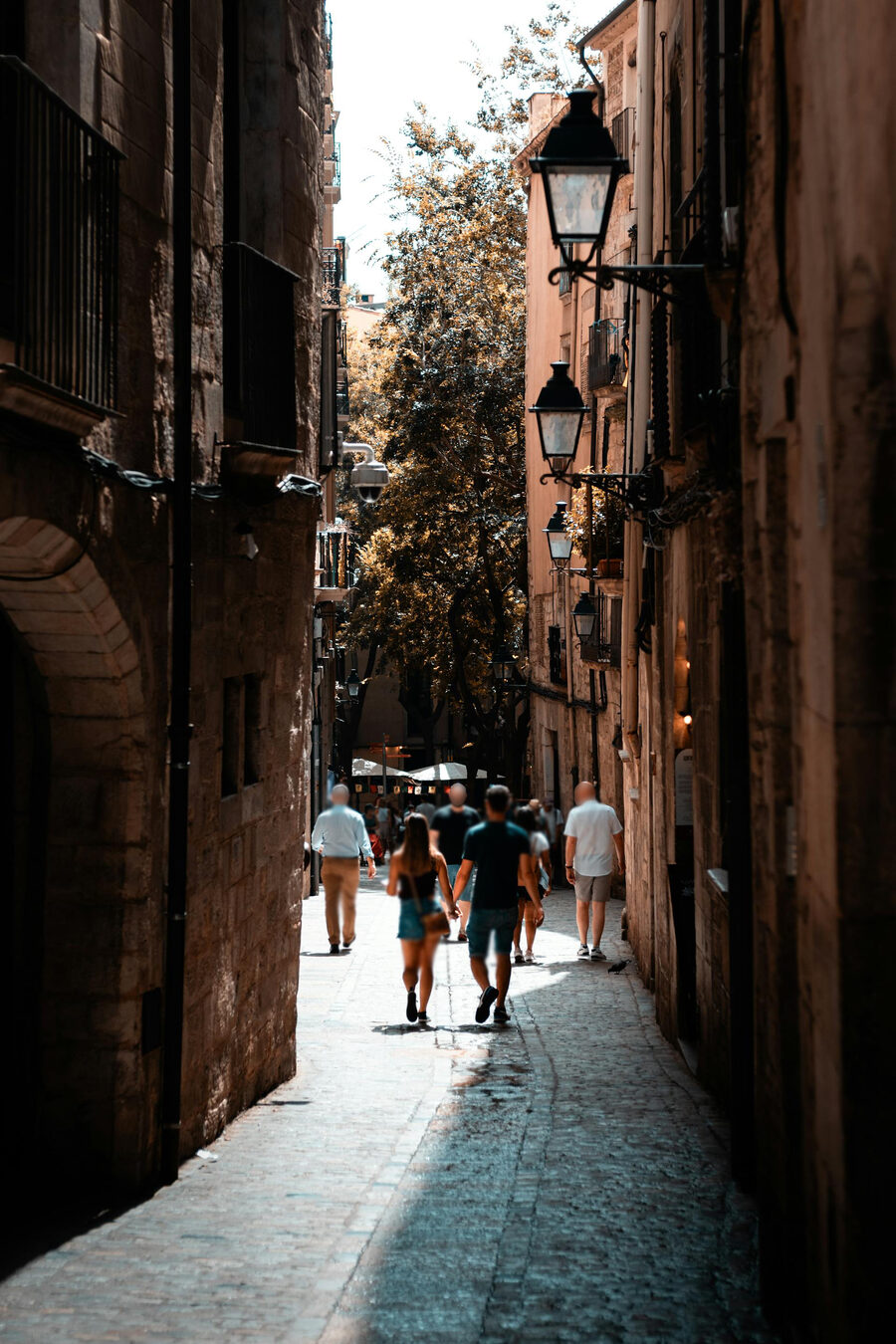
Come back down into the stepped lanes around Carrer de la Força, one of the best preserved Jewish quarters in Europe. The community lived here for centuries, until the expulsion of 1492. The Jewish History Museum is around €6 and closes at 14:00 on Sundays and Mondays. More in our El Call guide.
Free audio story in the Parlawalk app.
7. Sant Feliu and the lioness
Just below the Cathedral, next to the Basilica of Sant Feliu, a stone lioness climbs a column. Kiss its bottom, locals say, and you’ll come back to Girona. It’s a replica, and the custom is fairly recent, but the queue is real.
Free audio story in the Parlawalk app.
8. The Arab Baths (which aren’t Arab)
A 12th-century Romanesque bathhouse, named later because it looked Moorish. Around €3, and open on Mondays.
9. Sant Pere de Galligants
A Romanesque monastery, now the Archaeology Museum. Worth the short detour even just from outside.
10. The city walls
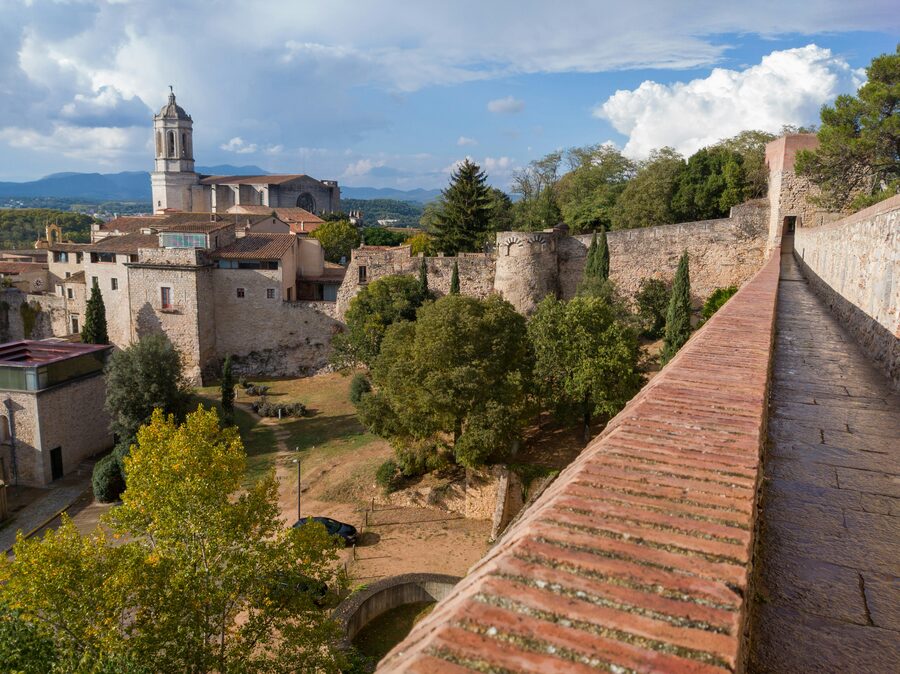
Climb onto the Passeig de la Muralla (free) behind Sant Pere de Galligants or near the Cathedral, and walk south. The towers look over the rooftops and, on a clear day, to the Pyrenees. You come down near Plaça de Catalunya, close to the station. The walls close at night, so walk them in daylight.
Eat
- Xuixo: Girona’s own pastry, fried, filled with crema catalana and rolled in sugar.
- Rocambolesc: Jordi Roca’s ice cream shop on Carrer de Santa Clara, near the river.
- Lunch: between 13:30 and 15:00. Look for the weekday menú del dia.
What catches people out
- Mondays: most museums close. The Cathedral, Arab Baths and Jewish History Museum (mornings) stay open.
- Stairs: steep and cobbled everywhere. Wear proper shoes.
- The last train: check the last train back before you set off, especially on the R11.
- Festival weeks: Temps de Flors (mid-May) and the Fires de Sant Narcís (late October; 23 October to 1 November in 2026) are great, but crowded.
How to hear the stories behind the stones
A free walking tour or a private guide tells you the history, on their schedule. A guidebook is free but means reading instead of looking. Parlawalk plays a short story on its own as you reach each place, in any order, offline. Five stops on this route are free, and the whole city is €9.99, once.
Quick questions
Is Girona worth a day trip from Barcelona? Yes. It’s close, compact, medieval rather than modernista, and much quieter.
Is half a day enough? For the river, the Cathedral and El Call, yes. Add the walls and the baths and you want most of a day.
Prices and timetables were checked in October 2026 and change often.
Walk this route with the stories playing
Five stops on this route are free in the Parlawalk app. Unlock the rest of Girona for €9.99, once. Download on your hotel wifi and it works offline all day.